
Describe it once
Tell us the roof type, what you noticed, and when the storm hit. We connect you with a local contractor who handles hail impact repairs.
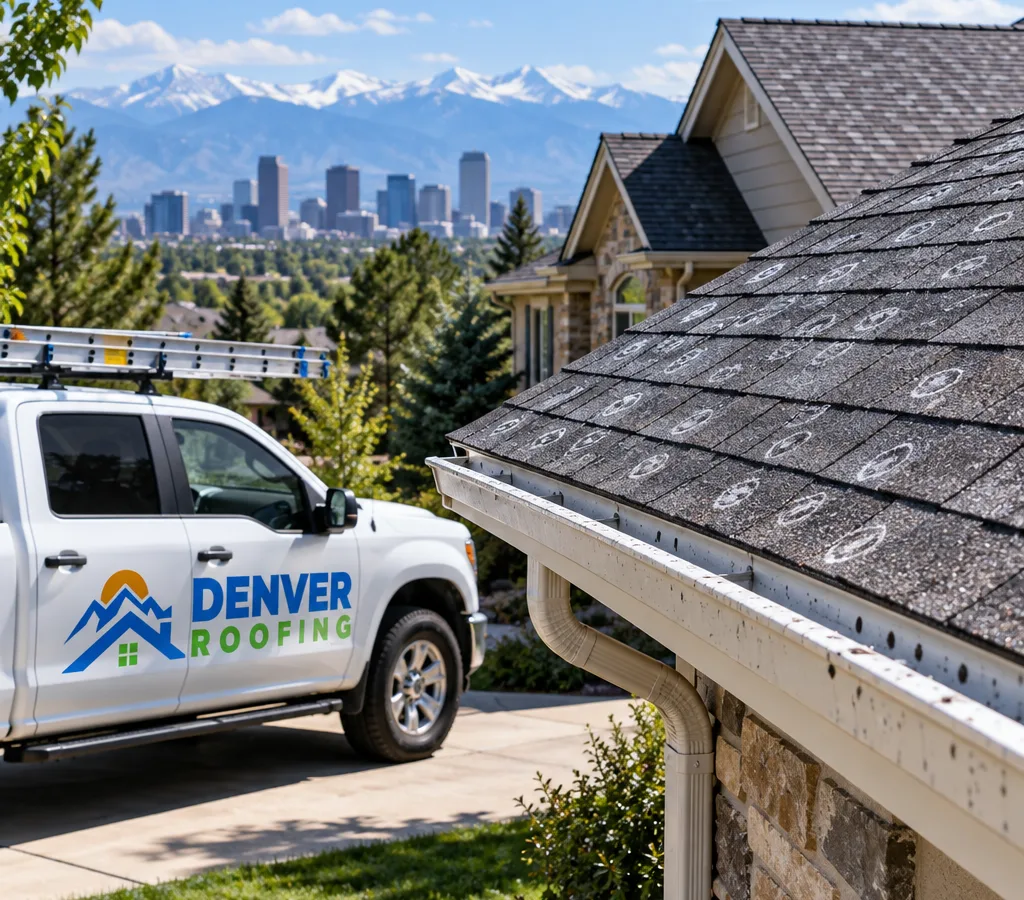
Hail damage roof repair in Denver, Colorado
Describe what you're seeing once and get connected with a local roofing contractor who can inspect the impact and handle the repair plan.
CALL NOW: (983) 955-0751Inspect the impact first
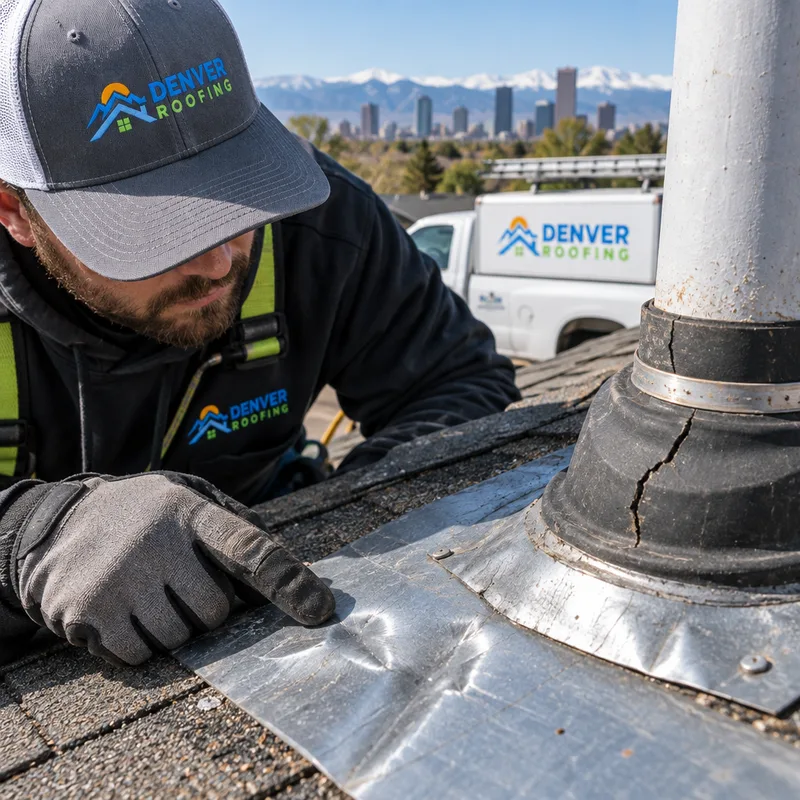
Hail damage roof repair in Denver usually starts with figuring out what was actually harmed and whether it's cosmetic, functional, or both. Hail can bruise asphalt shingles, loosen granules, crack the mat, dent metal flashing, loosen ridge caps, and crack roof cement around vents and pipe boots. The repair approach depends on how the damage is distributed, the roof type, and whether water intrusion has started.
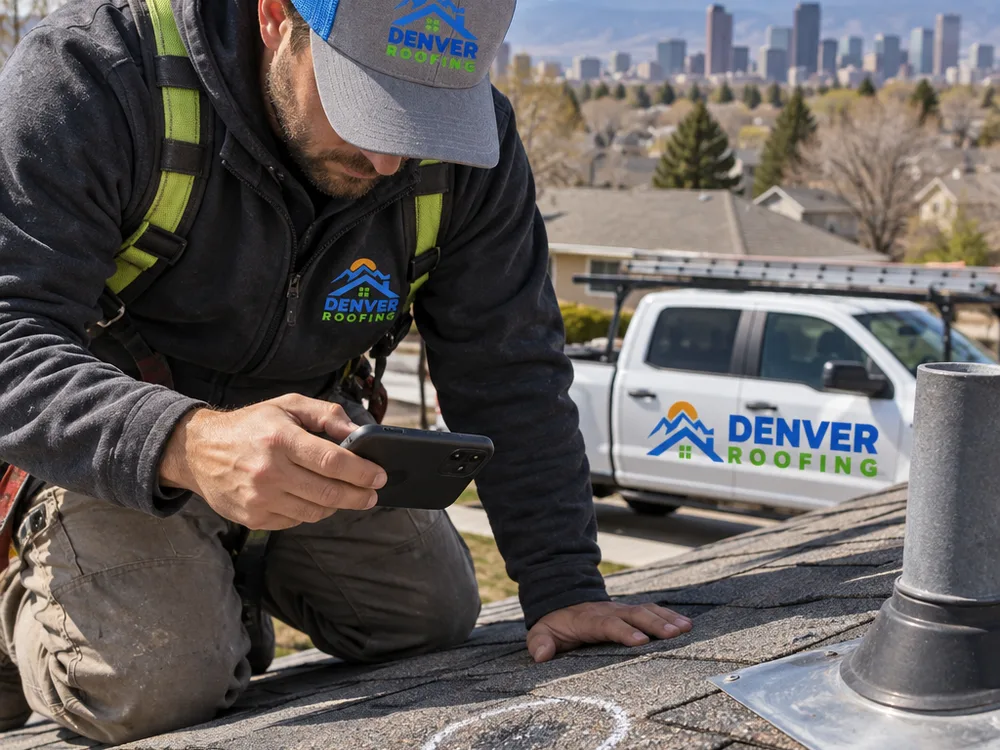
A contractor typically begins with a methodical inspection that includes:
In Denver's high sun and quick weather swings, a roof that looks mostly fine from the ground can still have functional damage that shortens its life. If you're not sure what you're looking at, a call to Denver Roofing gets you connected with a local contractor who can confirm the damage type and explain the repair options in plain terms.
If you're still sorting out who to talk to, starting with roofing in Denver can help you understand how contractors typically handle inspection notes, photos, and next steps after a storm.
A clearer first step
Tell us the roof type, what you noticed, and when the storm hit. We connect you with a local contractor who handles hail impact repairs.
Hail patterns can be block-by-block in Denver. Getting matched to someone who works nearby helps the inspection reflect local storm conditions.
The contractor can separate cosmetic marks from functional damage and outline what needs repair now versus what should be monitored.
If there's staining, exposed fasteners, lifted flashing, or damaged penetrations, the contractor can focus first on the points most likely to leak.
You speak directly with the contractor, ask questions, and decide whether to move forward after you understand the plan.
Five clear steps
Share the storm date if known, your roof material, and what you're noticing: dents, missing granules, interior staining, or debris in gutters.
We match your call to an independent contractor in the Denver area who handles hail damage inspections and repairs.
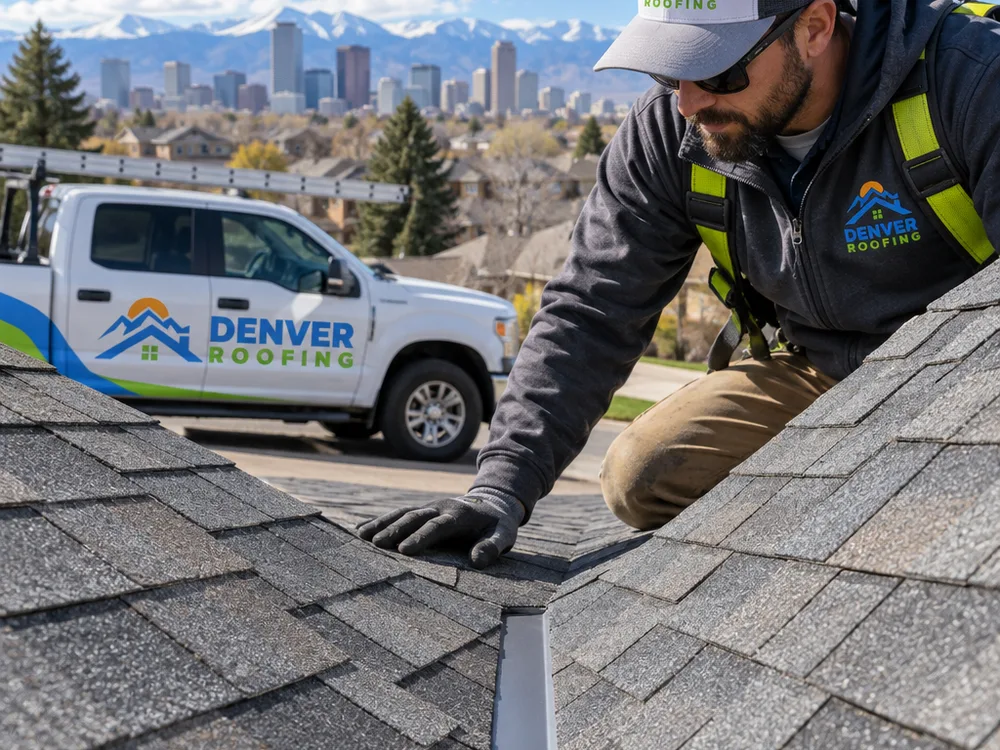
The contractor inspects shingles, flashing, penetrations, gutters, and accessible attic or ceiling signs that point to active leaks.
You'll hear what's damaged, which repair approach fits, and what to document for your records.
If you want to proceed, you coordinate timing and details directly with the contractor who will do the work.
If you suspect hail impact, don't wait for a drip to confirm it. Describe the roof and what you've noticed once, and get connected with a Denver-area contractor who can inspect and explain your options.
Impact points and repairs
Common hail repair questions
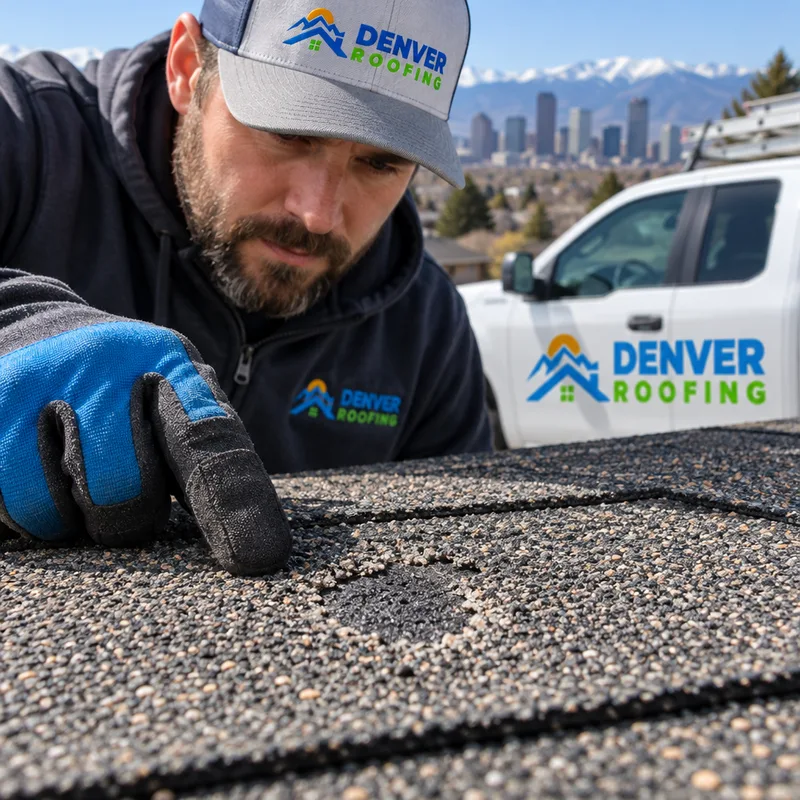
The most common signs are shingle bruising, granule loss, cracked or broken tabs, and damage around flashing and roof penetrations. On asphalt shingles, hail often leaves a round impact area where granules are knocked loose; on metal components, it can leave dents that help confirm the hail size and direction.
Yes, a roof can leak after hail without obvious missing shingles because impact damage often shows up at flashing seams, pipe boots, skylight curbs, or small cracks that open up when rain and wind hit. A contractor will look closely at these transition points because they are where water gets in first.
Start by noting what you can safely see from the ground: dented gutters, downspouts, window screens, or scattered granules near downspouts. Inside, check ceilings and attic areas for staining or dampness. Avoid going on the roof yourself; a contractor has the footing and inspection approach to spot damage without creating it.
It depends on the damage pattern and whether the roof can be repaired without creating weak spots or mismatched sealing. Local roofers commonly discuss options such as spot shingle replacement, replacing ridge caps or flashing components, or addressing a larger area when impact is widespread.
Have the roof type, approximate age if you know it, the date of the storm, and what you observed, such as leak stains, granules, dents, or damaged vents. If you can safely take ground photos of downspouts, gutters, and visible roof slopes, the contractor can use that context when planning the inspection.
Contractors typically document damage with labeled photos of test areas, close-ups of bruises or cracks, and notes about impacted components like vents, flashing, and gutters. If you're dealing with an insurer, ask the contractor what documentation they provide and how they prefer to walk through findings.
Yes, some hail impact marks look subtle at first and become more obvious as granules loosen and weather exposes the underlying mat. If you notice new granules washing out at downspouts or new staining indoors after later rain, it's a good reason to have the roof re-checked.
You describe the storm and what you're seeing, and we connect you with a local contractor who handles hail impact inspections and repairs. You then speak with the contractor directly, ask questions, and decide whether to proceed.
One call starts the inspection conversation
If your roof was in a hail path, a focused inspection can clarify what's damaged and what repairs make sense. Call and describe what you've noticed once, and Denver Roofing will connect you with a local contractor who can take it from there.