
You describe the issue once
Instead of calling multiple shops and repeating details, share what you're seeing and get connected with a local contractor who handles commercial roof repair.
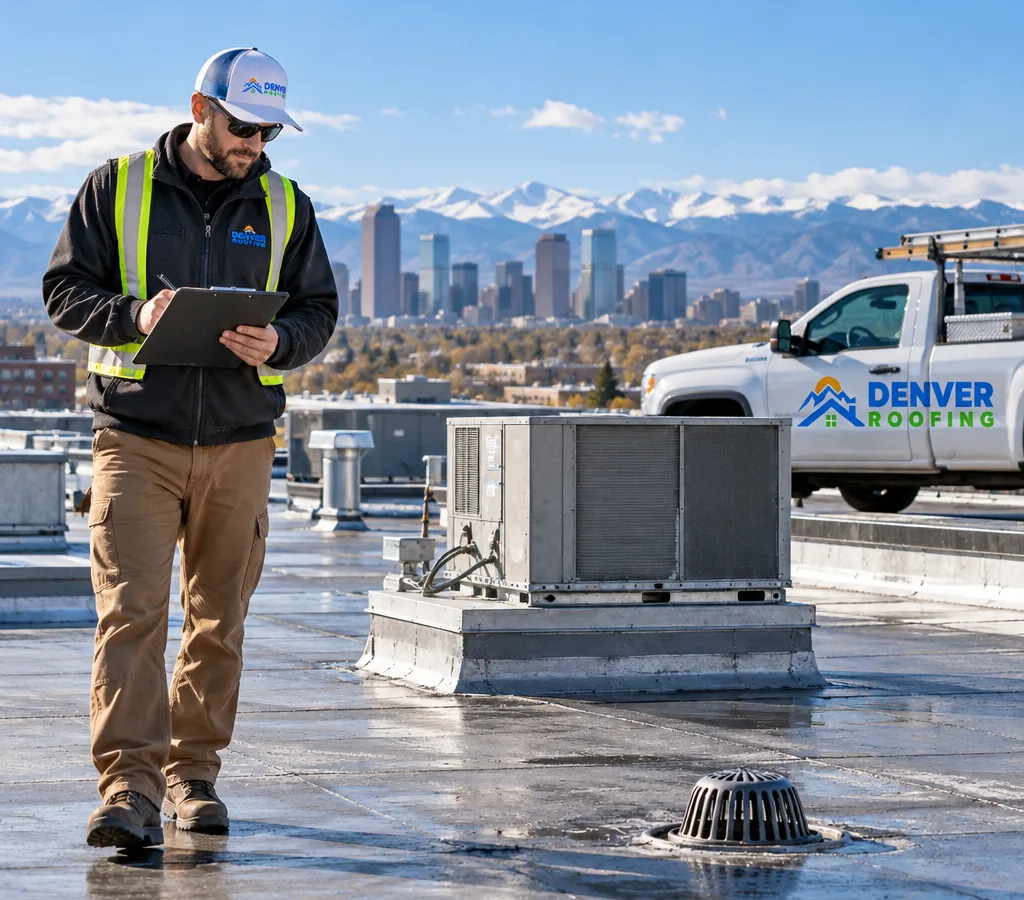
Commercial roof repair in Denver, Colorado
Describe the leak or damage once and get connected with a local contractor who works on commercial flat roofs across the Denver area.
CALL NOW: (983) 955-0751Find the source before the fix
Commercial roof repair is problem-solving on a low-slope system, not just sealing a spot that looks wet. A good repair starts by figuring out how water is getting in, where it travels, and which roof component actually failed.
When you call about commercial roof repair Denver Co, the contractor you speak with will usually start by asking what type of roof you have and what you are seeing inside the building. On flat and low-slope roofs, leaks often show up far from the entry point because water can run along insulation, decking, or flutes in metal deck before it drips.
Common commercial flat-roof systems a contractor may be repairing include:
A careful roof repair visit typically includes:
In Denver, hail and strong wind events can turn small weaknesses into active leaks. Even when the membrane looks fine from a distance, the details—seams, terminations, and flashings—are where many repair decisions get made.
If you also need broader help sorting out what kind of roofing contractor you need for the building, roofing in Denver Colorado is the bigger picture. This page stays focused on getting the roof repaired.
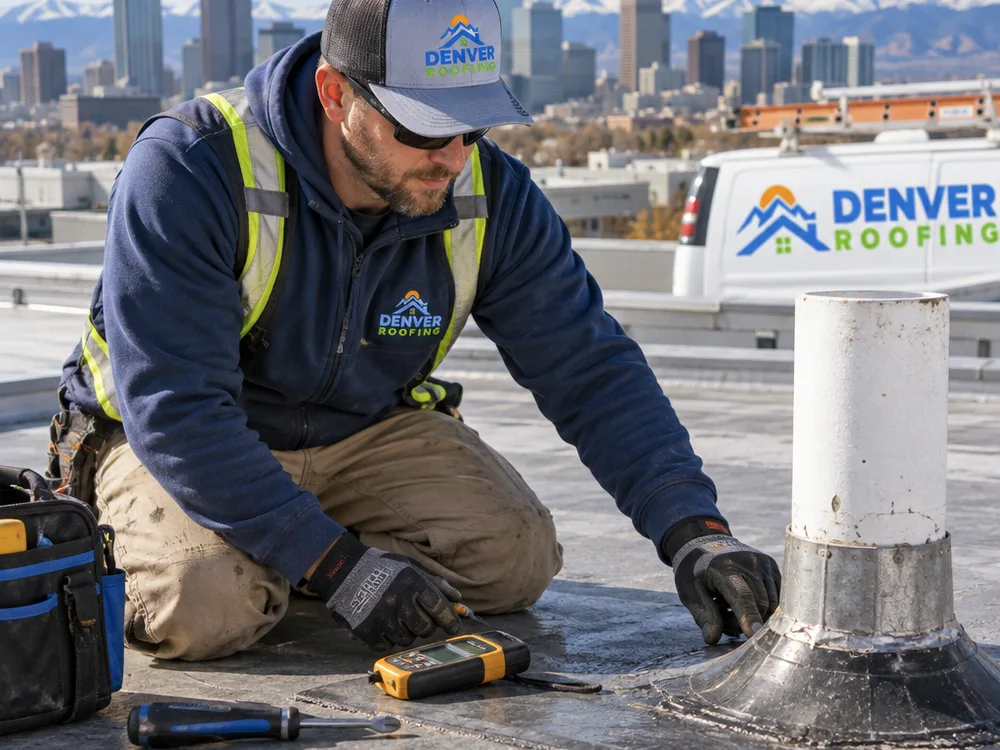
A focused commercial connection
Instead of calling multiple shops and repeating details, share what you're seeing and get connected with a local contractor who handles commercial roof repair.
Commercial repairs are usually about seams, flashings, drains, and penetrations, not shingles. The contractor can focus on the roof details that matter on low-slope systems.
Access, staging, and work hours matter on commercial sites. The contractor can plan around tenants, deliveries, and building use.
A leak fix can be a small targeted repair, a larger cut-out and patch, or a maintenance plan. You can talk through the options directly with the contractor.
Along the Front Range, hail and wind can damage membranes, flashings, and rooftop equipment details. The contractor can help sort out what is storm-related versus aging and wear.
Four clear steps
Share the building type, the roof type if you know it—TPO, EPDM, modified bitumen, or BUR—where the leak shows inside, and whether rooftop units, drains, or penetrations are nearby.
Denver Roofing matches your request to an independent contractor who handles commercial roof repair in the Denver area.
The contractor can ask the right follow-ups, explain what they want to inspect, and outline repair approaches for your specific roof system.
You stay in control of the decision. If you want to move forward, you work with the contractor on timing, access, and the repair plan.
If water is getting into offices, retail space, or a warehouse, the priority is a clear scope. Describe where the leak shows up and get connected with a local contractor who handles commercial roof repair in Denver.
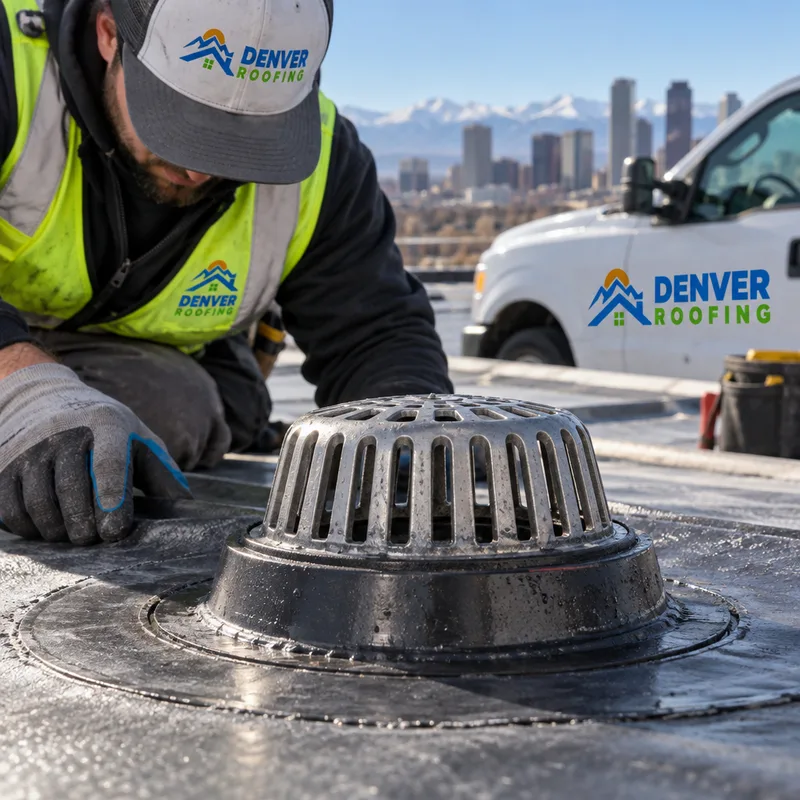
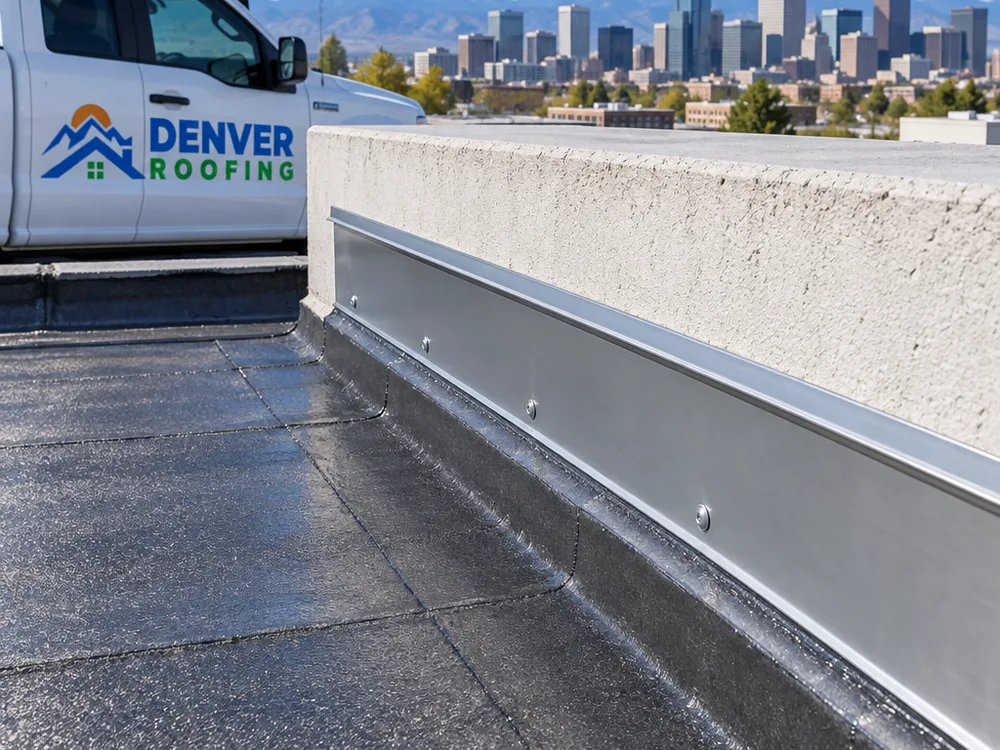
Flat-roof leak points
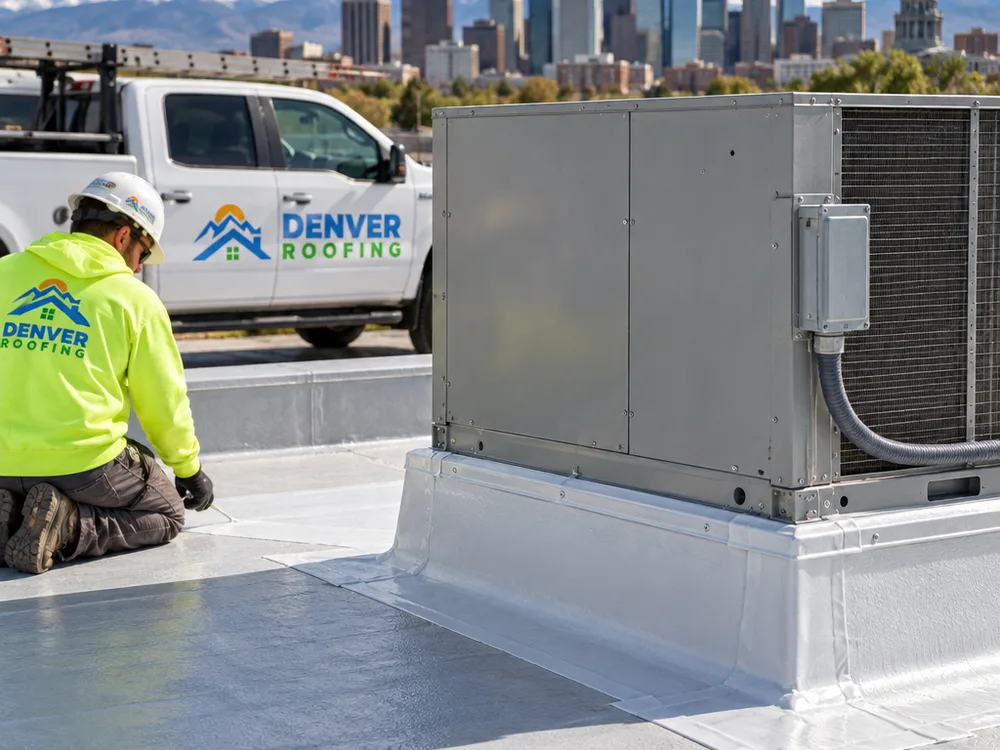
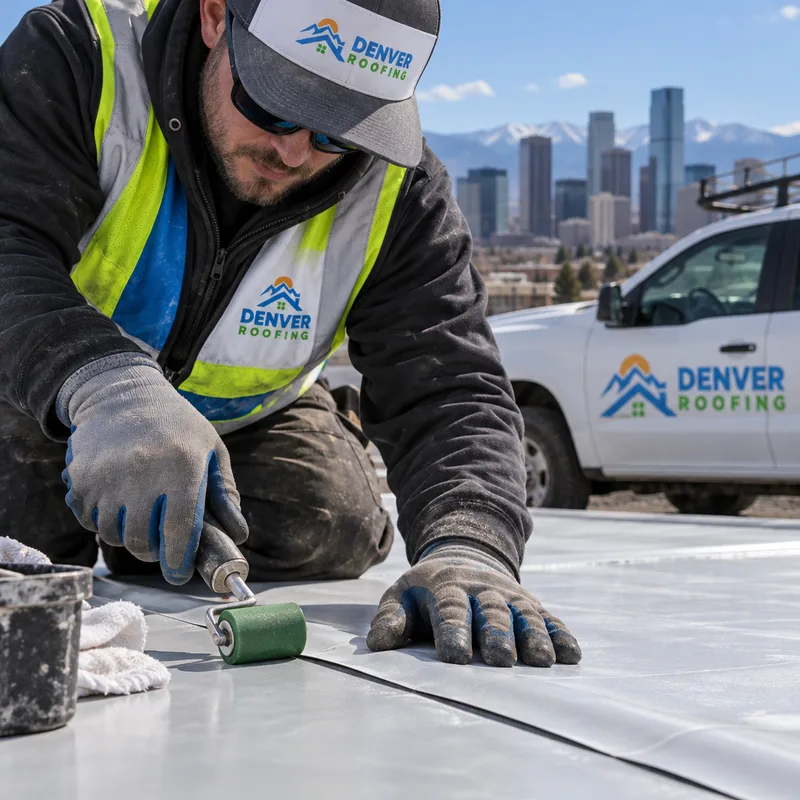
Low-slope roofing questions
The most helpful details are where the leak shows inside, when it happens—only during heavy rain, after snow melt, or all the time—and what is above that area on the roof, such as a drain, HVAC unit, skylight, or pipe. If you know the roof type and approximate building height, that also helps the contractor plan access and tools.
On low-slope roofs, water can travel under the membrane or along decking before it drips inside, so the contractor usually traces likely paths from the interior location to roof details uphill or nearby. They will pay close attention to penetrations, seams, terminations at walls, and drain areas because those details fail more often than the middle of the roof field.
Repairs often include reworking seams, patching punctures, replacing failed flashing at penetrations or curbs, and addressing edge terminations. If insulation is saturated, the contractor may recommend a cut-out and replacement of wet material before the patch goes on because trapped moisture can keep causing problems.
Ponding water can come from clogged drains, localized low spots, or slope issues, and each one has a different fix. A contractor may start with drainage corrections such as cleaning, strainers, and drain repairs, then evaluate whether crickets, tapered insulation, or other changes make sense for the area that holds water.
Expect coordination around roof access, safety, and where materials can be staged, plus some noise if work is near rooftop units or metal decking. Many repairs are focused on specific details rather than the entire roof, but the contractor will still want a clear path to the work area and a way to protect entrances and walkways below.
Not always. Hail can bruise or fracture some membranes and can damage flashings, caps, and rooftop accessory details that later open up under thermal movement and weather. In the Denver area, a roof may look mostly intact from the ground but have detail damage that appears as leaks weeks later, which is why a close roof-surface inspection matters.
You work directly with the contractor who takes the job. Denver Roofing answers the call, takes the basic details, and connects you with a local contractor so you can discuss inspection, scope, and repair options person-to-person.
One call starts the conversation
If you're dealing with active leaks, recurring stains, or concerns after a storm, describe what you're seeing once and we'll connect you with a local contractor who handles commercial roof repair Denver Co for flat roof systems.