
Describe the problem once
Tell us your roof type, building use, what you're seeing inside, and where the leak shows up. We use that to connect you with a contractor who takes on commercial roofing work.
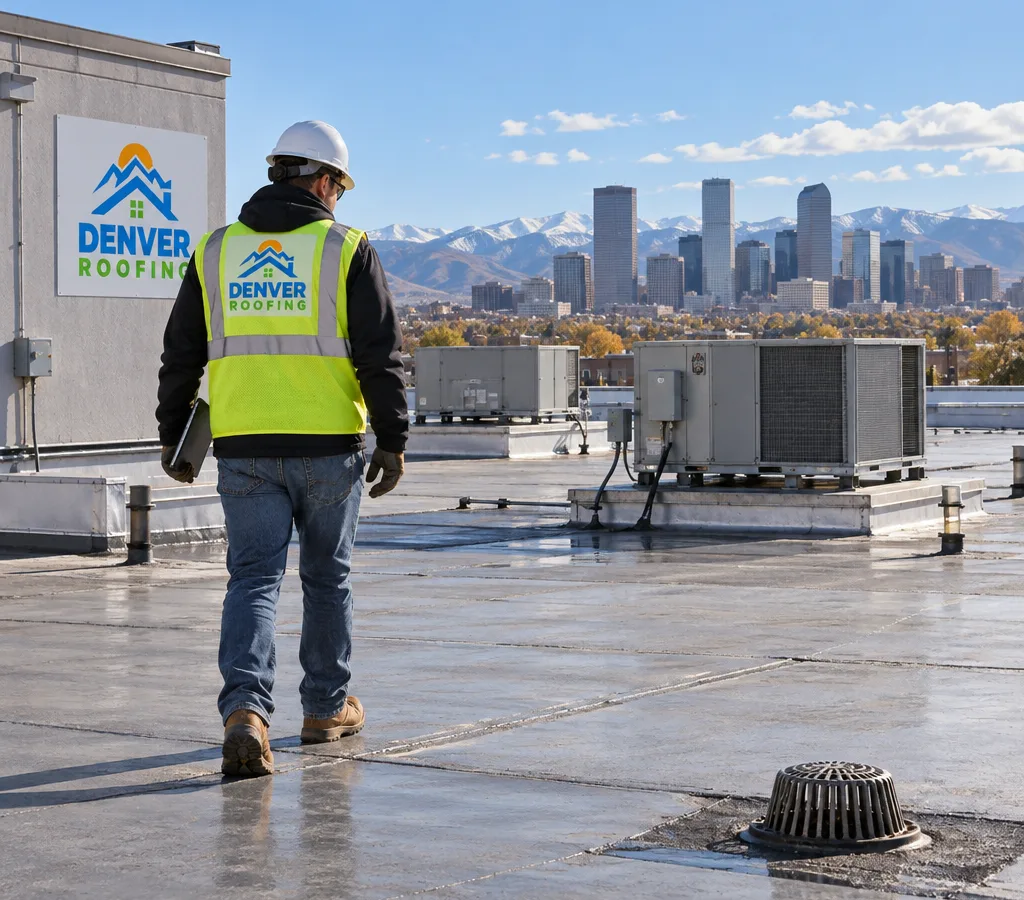
Commercial roofing in Denver, Colorado
Describe your building and what you're seeing once, and we'll connect you with a local commercial roofing contractor who handles this kind of work in Denver.
CALL NOW: (983) 955-0751Understand the commercial scope
Commercial roofing is mostly about managing water, movement, and rooftop equipment on large, flat or low-slope systems. If you're searching for commercial roofing Denver Co, you're usually dealing with one of three situations: a leak that keeps returning, a roof that needs planned maintenance, or a system that has reached the end of its service life and needs a retrofit or replacement.
A local contractor may handle work such as:
Denver's sun, temperature swings, and hail season all matter on commercial roofs. UV and thermal cycling can stress seams and flashings, and hail can bruise certain membranes and damage metal components. A good plan starts with a roof walk, documentation, and a clear scope you can compare across bids.
If you need a starting point for the broader category of roofing work in the area, roofing in Denver Colorado can help you frame the conversation before you talk through your commercial roof specifically.
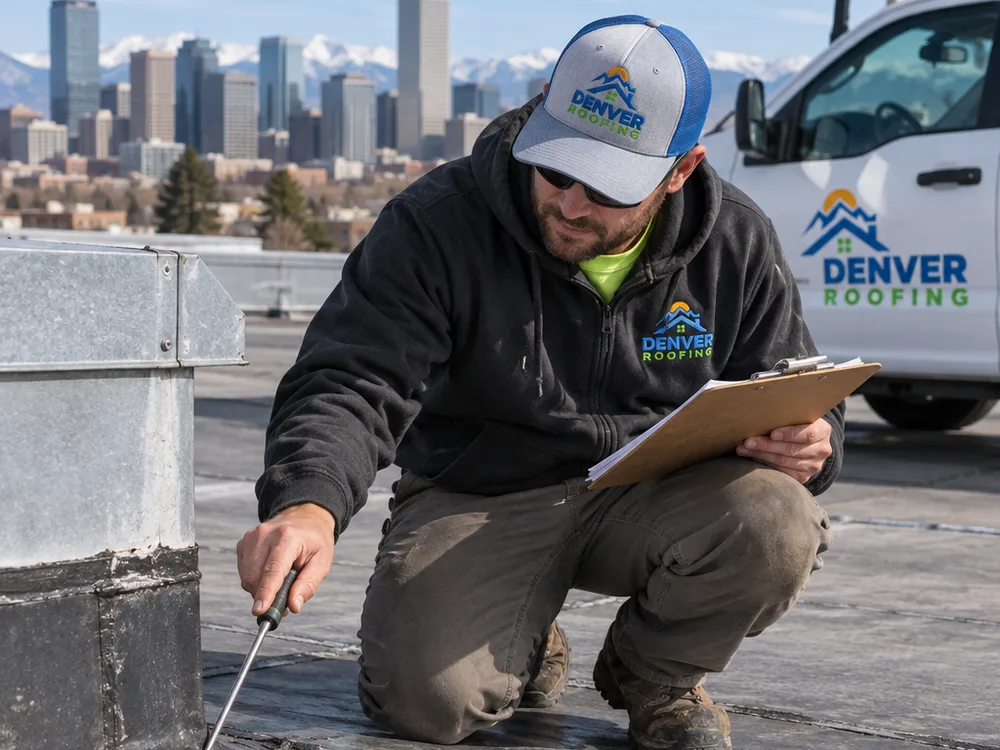
A focused first conversation
Tell us your roof type, building use, what you're seeing inside, and where the leak shows up. We use that to connect you with a contractor who takes on commercial roofing work.
We connect you with an independent contractor who works in Denver and the surrounding area, so you're talking to someone familiar with local conditions like hail exposure and rooftop equipment layouts.
You talk directly with the contractor about scope, options, and scheduling. You decide whether to move forward.
Whether you're planning maintenance, a coating, or a full replacement, the contractor you're connected with can look at your system and recommend a practical next step.
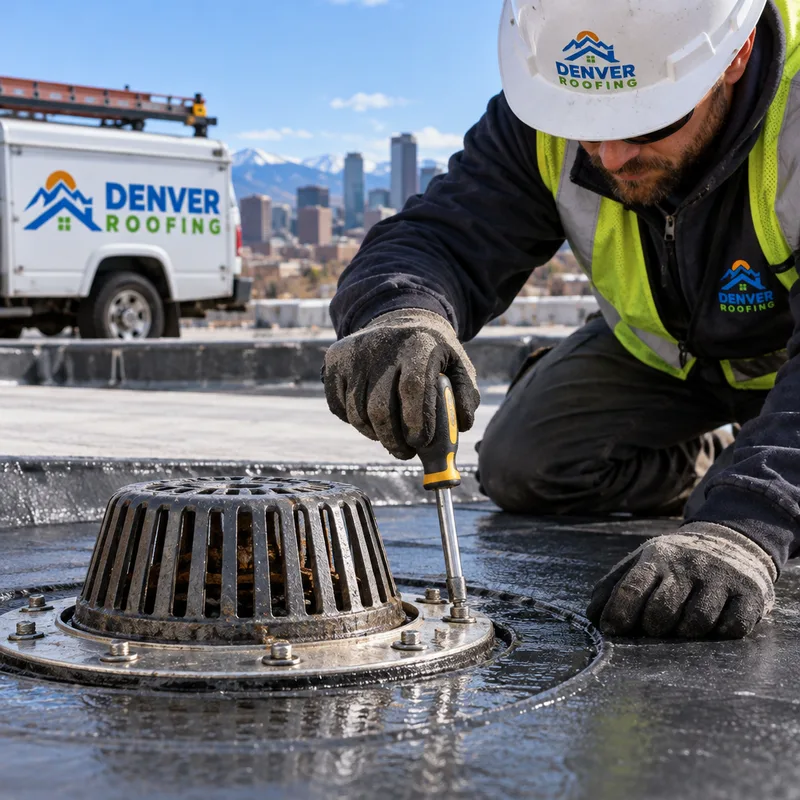
We'll ask about drains, penetrations, parapet walls, and rooftop units so the contractor starts the call with useful context instead of guessing.
Four clear steps
Tell us the building type, approximate roof size, roof access, and whether the roof is flat, low-slope, or steep-slope.
Mention where water shows up, when it happens, and what prior patches or coatings were done if you know.
You're connected with a local contractor who handles commercial roofing and can discuss inspection, repair, maintenance, coating, or replacement options.
The contractor explains what they see, what they recommend, and what they need from you to firm up the plan.
If you're managing leaks, ponding water, or a roof nearing the end of its lifecycle, one call can connect you with a Denver commercial roofing contractor who can take it from there.
Systems, drainage, and details
Commercial roofing questions
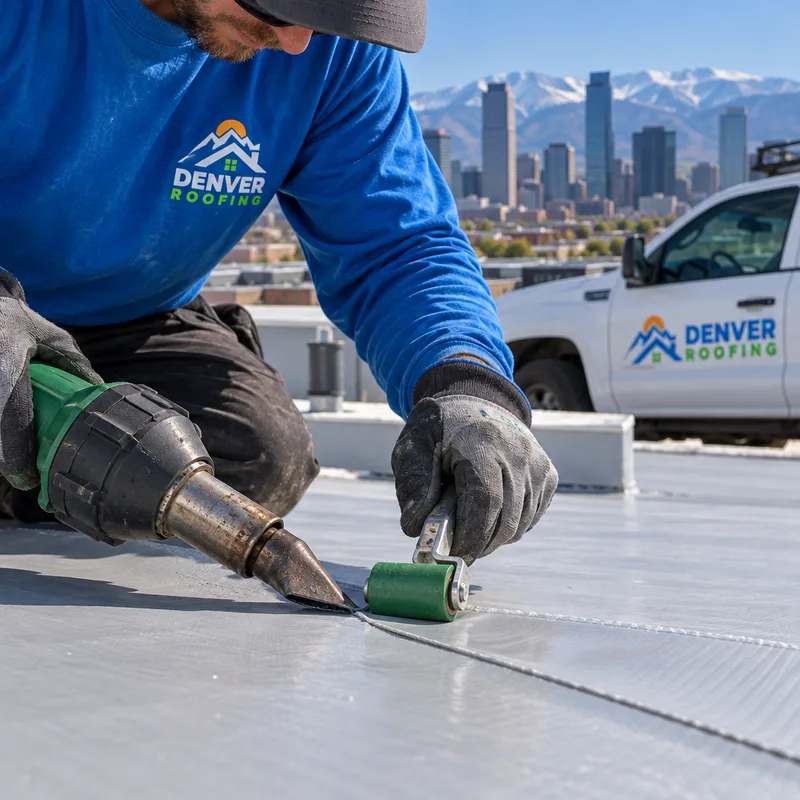
The decision usually comes down to membrane condition, wet insulation, and how widespread the failures are. A contractor will look for seam separation, punctures, saturated areas, and recurring leaks around penetrations. Coatings are generally discussed when the existing membrane is still structurally sound but weathered, while reroofing is more likely when there is extensive moisture, widespread deterioration, or incompatible layers.
Have the building address, roof access details, and a simple description of the problem areas ready. Helpful details include when the leak appears, where water shows inside, whether rooftop units are nearby, and any records on the current roof type. Photos from inside and from the roof, if available and safe to take, also help.
A commercial roof inspection focuses on drainage, seams and laps, penetrations, flashing terminations, and perimeter edges. In Denver, contractors also pay attention to hail impact marks, UV weathering, and movement-related stress points near curbs, skylights, and equipment supports.
Water can travel along the deck, insulation layers, or structural members before it drips inside. A contractor often starts by mapping interior leak locations, checking roof slope and drain paths, and then examining penetrations and seams upslope from the visible interior damage.
Sometimes a recover system is possible, but it depends on the existing roof, whether moisture is trapped in the assembly, and whether the deck and attachment method can support the new system. The contractor will evaluate existing layers, signs of moisture, and how edges and penetrations would be rebuilt before recommending a recover or tear-off.
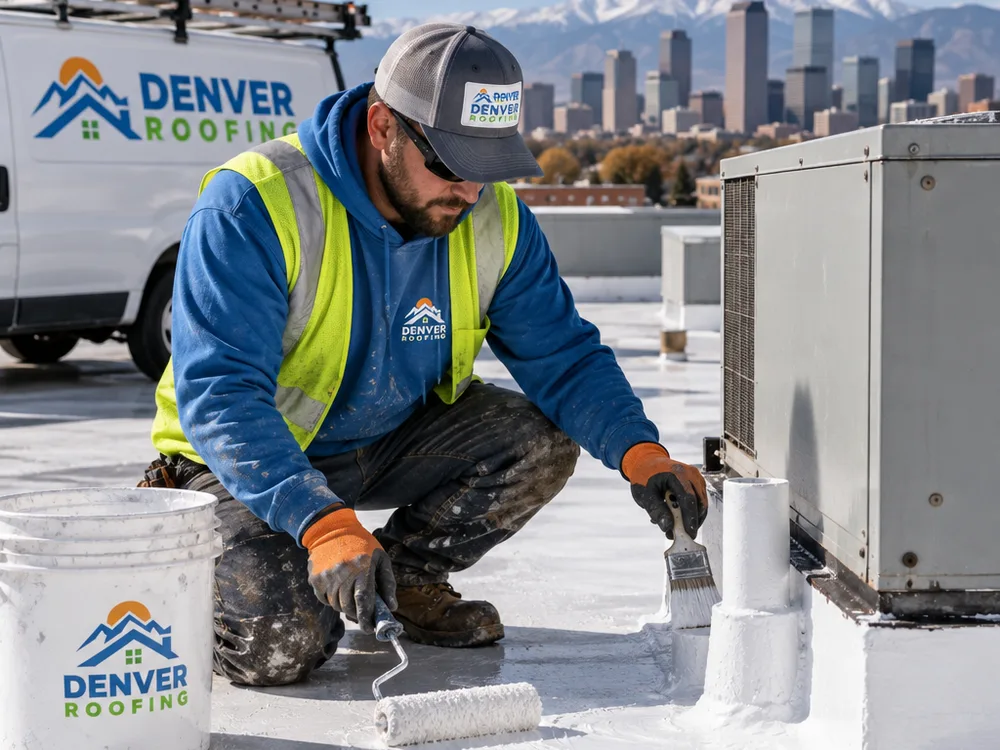
Rooftop HVAC units, exhaust fans, and electrical penetrations add curbs, pipes, and supports that need durable flashing and ongoing maintenance. Temperature swings can stress these details, and service traffic can wear pathways; contractors may recommend protective walk pads or defined service routes where foot traffic is common.
Permitting depends on the scope, but the contractor can explain what typically applies for a repair, recover, or replacement and who is responsible for pulling permits. If permits are needed, ask how the roof assembly, insulation, attachment method, and required inspections will be documented.
One call starts the conversation
Call Denver Roofing and describe your roof type, what's happening inside the building, and any prior work you know about. We'll connect you with a local contractor who handles commercial roofing in Denver, Colorado so you can get clear options and decide what to do next.